01
Spirit
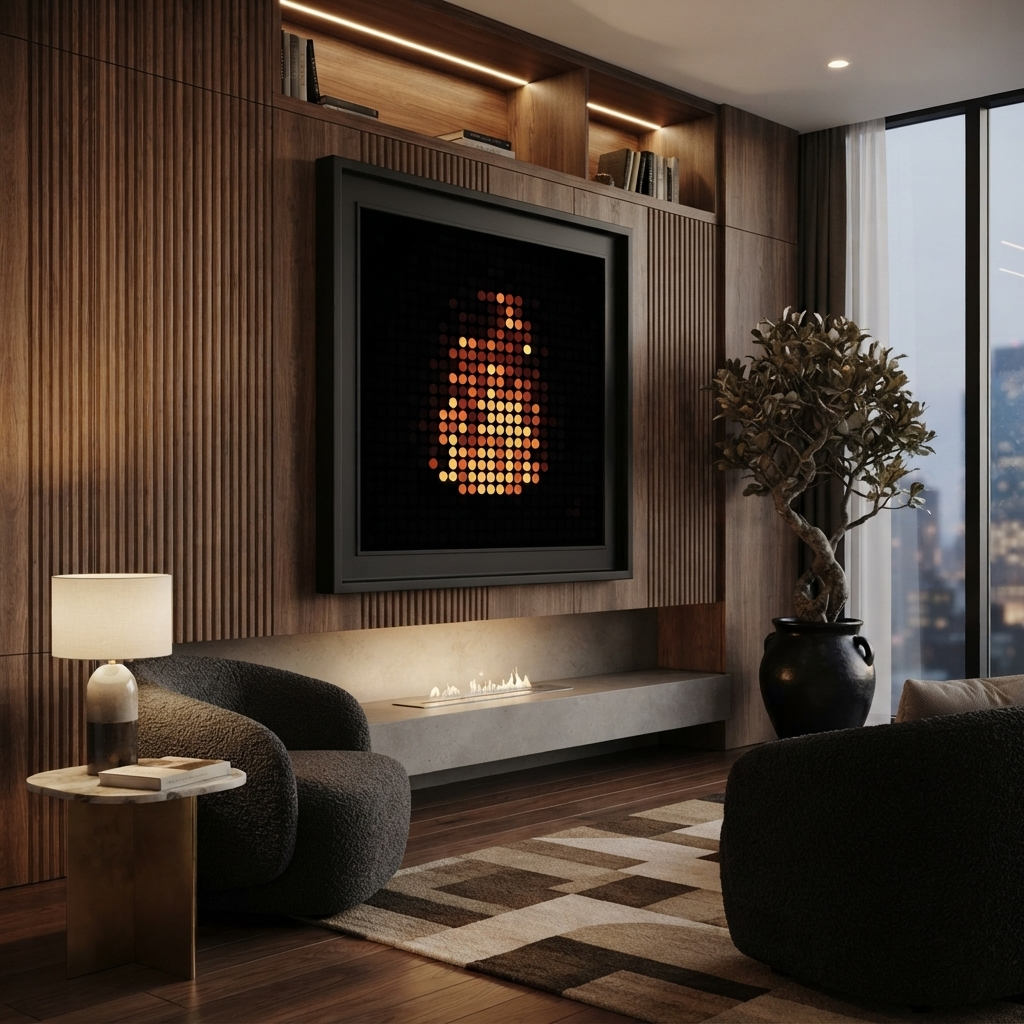
A flame drawn entirely from circles — fifty shades of amber, copper, and ochre, scaled at 2 cm per cell. Each dot a decision. Designed to hold a wall.
Each piece below was designed in CUBLOK — one cell at a time, each cell one centimetre. The grid is not a background. It is a blueprint for something that can be built with your hands.
A flame drawn entirely from circles — fifty shades of amber, copper, and ochre, scaled at 2 cm per cell. Each dot a decision. Designed to hold a wall.
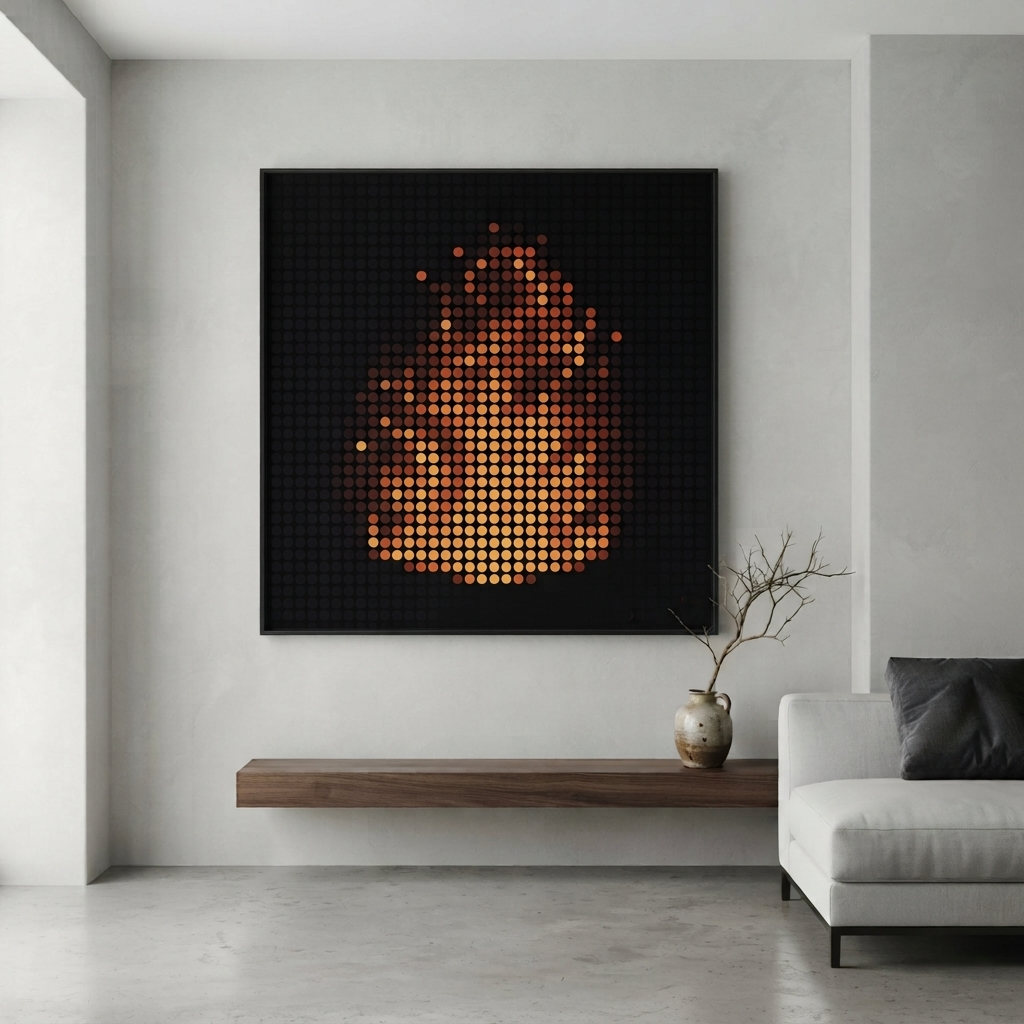
The same composition rebuilt at 1.2 cm per cell. Smaller circles, more gradations, more grain. How scale changes what you feel.
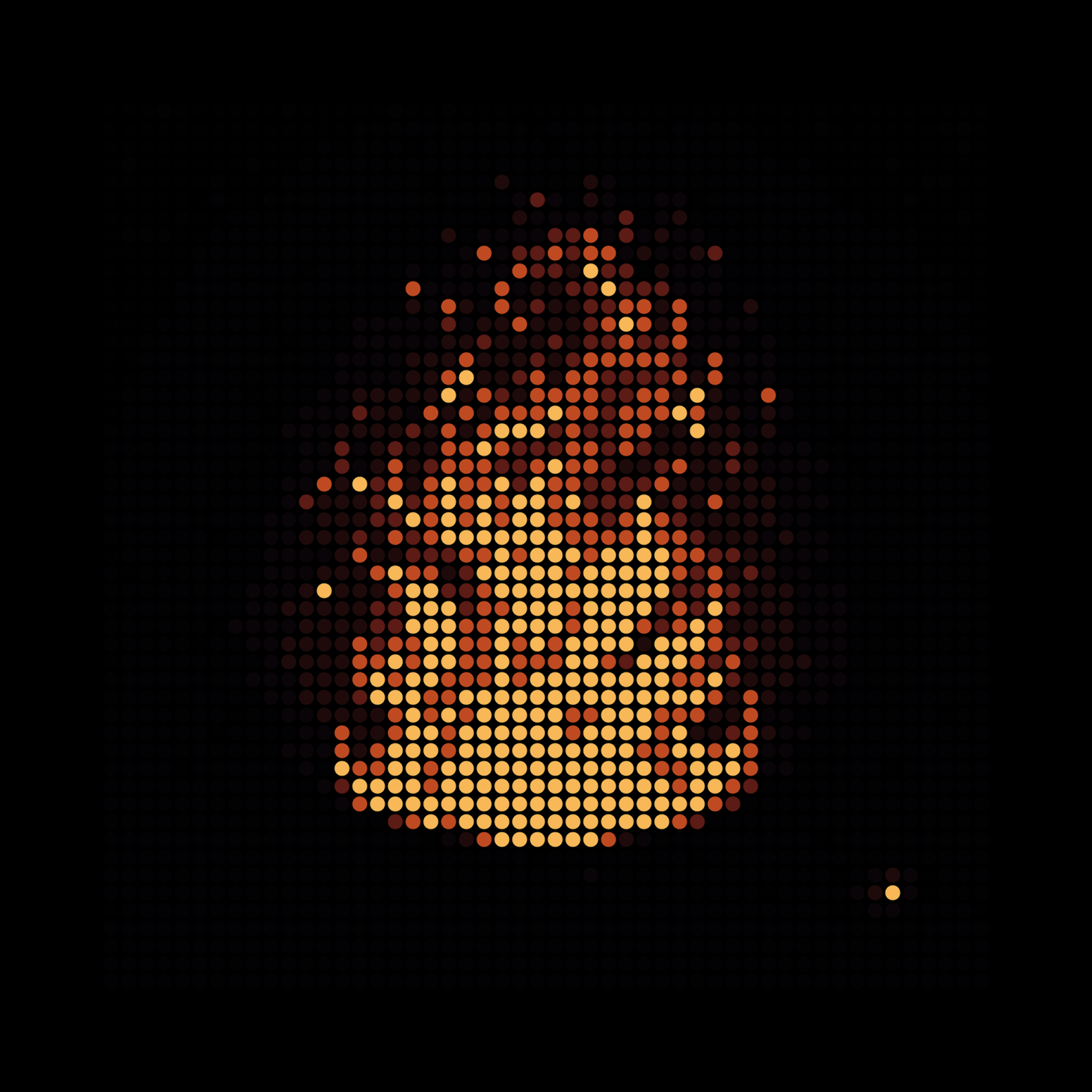
The composition as CUBLOK exports it — no room, no context. Just the grid and the decision made inside each cell.
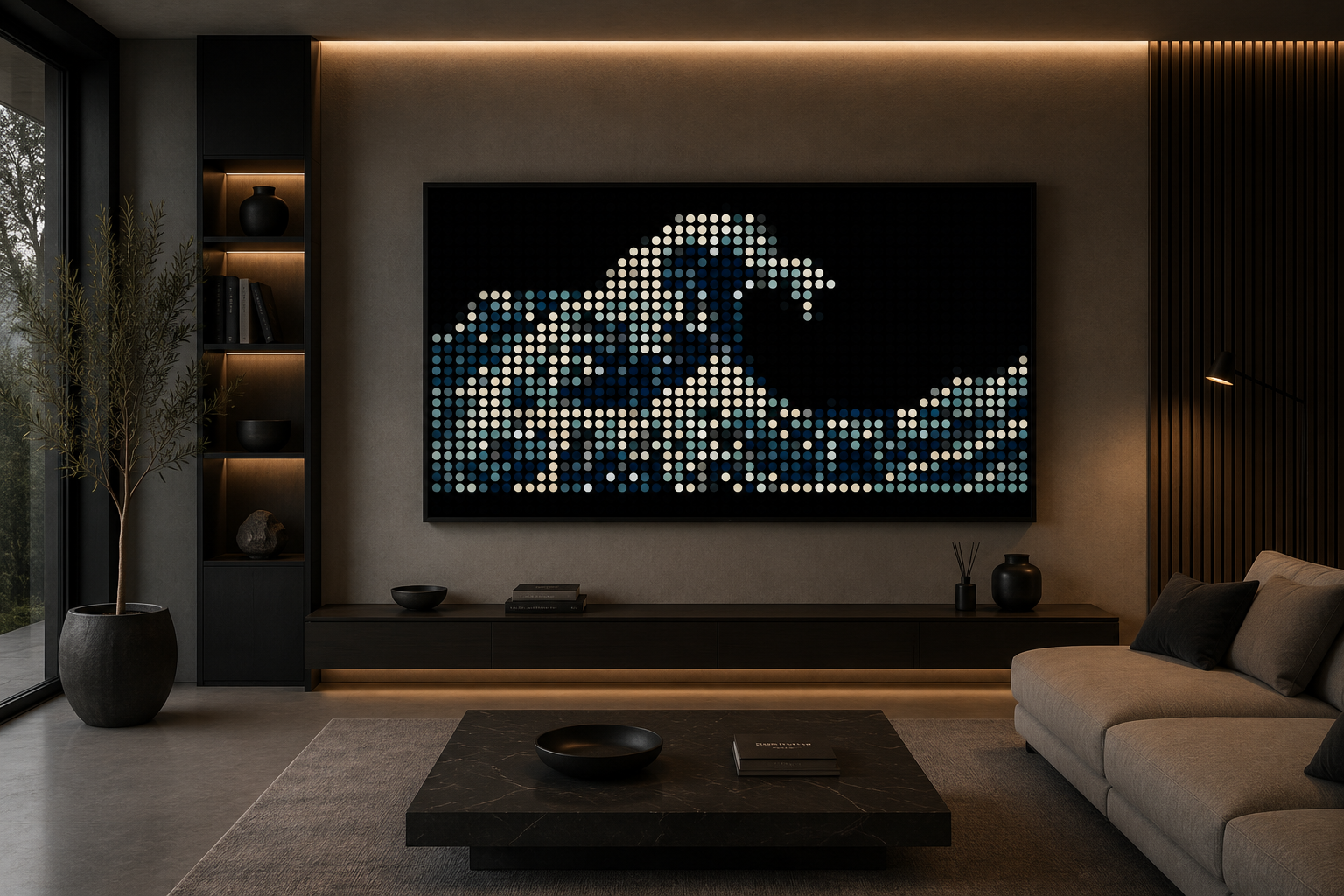
A great wave interpreted in circles — blues, teals, and ivory pushing against a deep ground. The oldest subject in art, rebuilt one dot at a time.
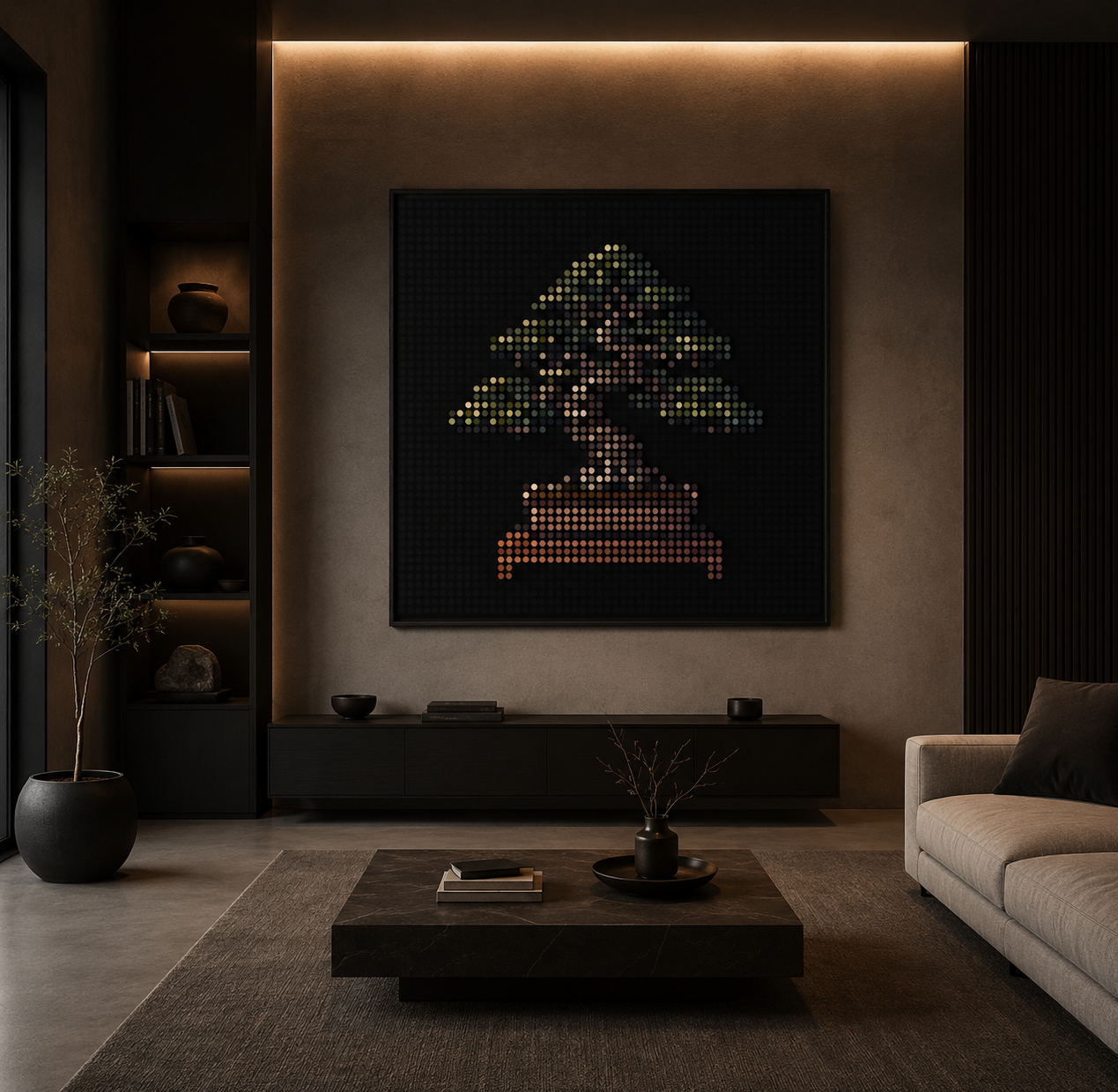
Centuries of patience compressed into a grid. Olive, sage, and terracotta — the bonsai as solid paint, cell by cell.
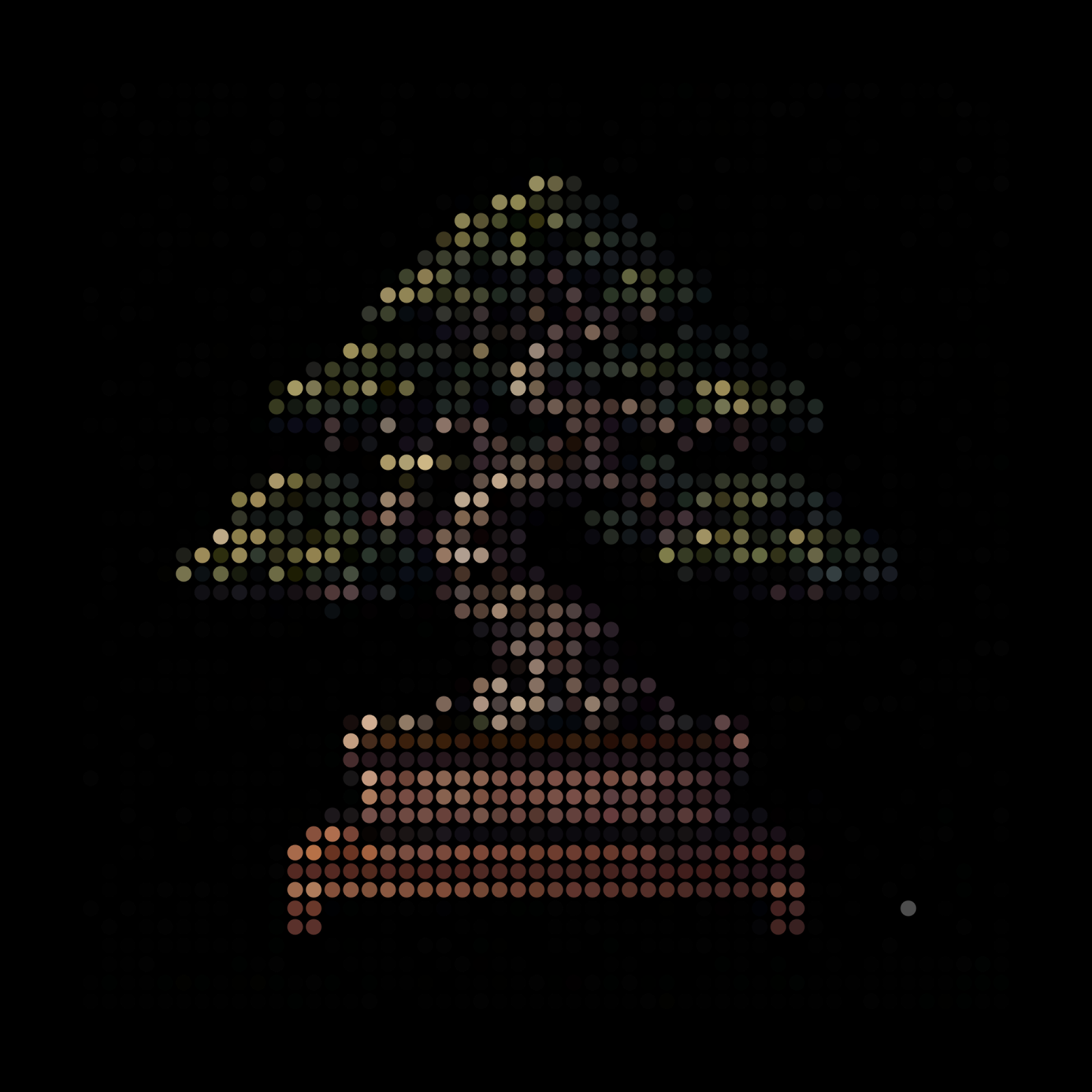
The same bonsai as CUBLOK exports it — no room, no frame. Muted greens and earth tones against pure black.
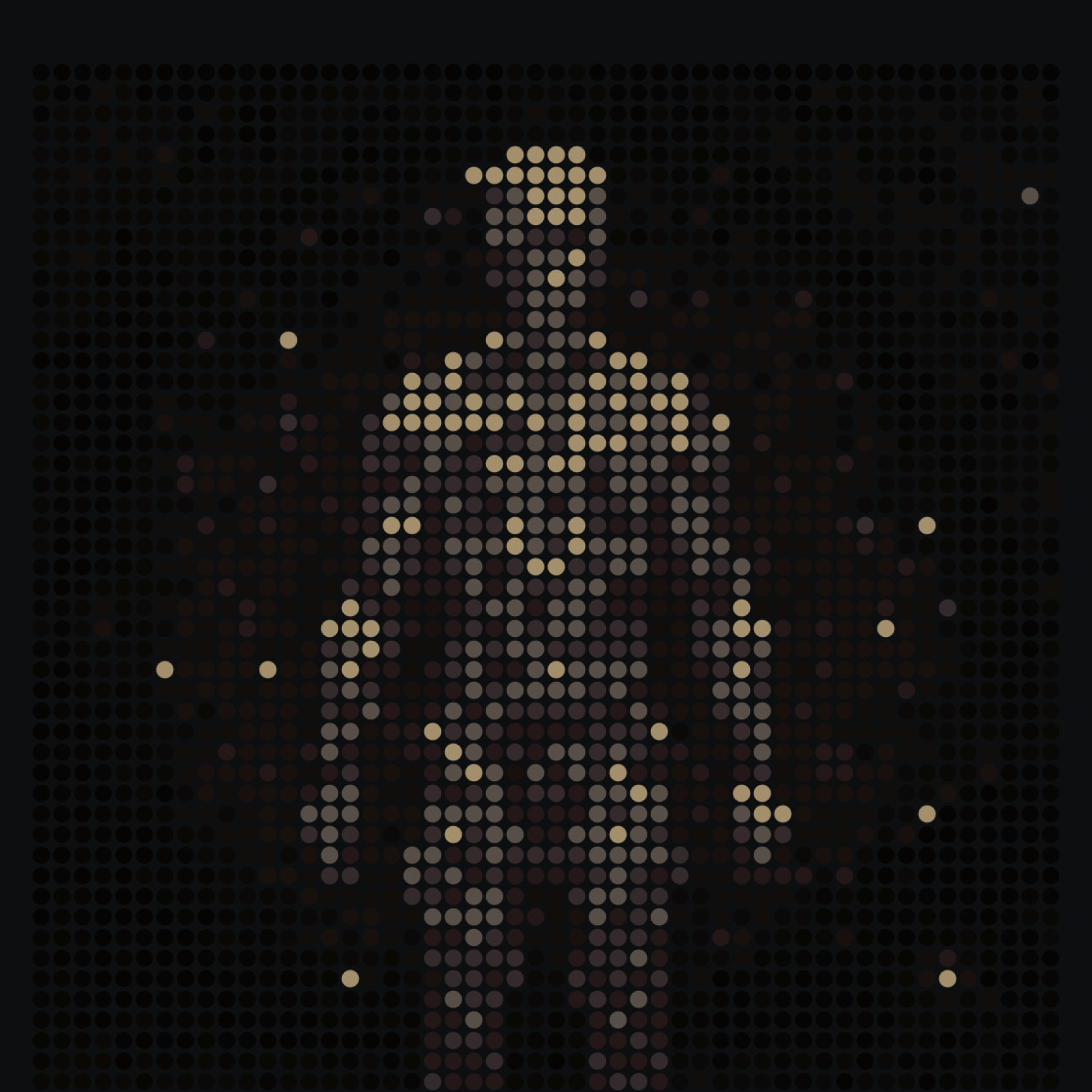
A standing figure barely separated from the ground it stands on. Sand, shadow, and silence — built from a full 50×50 grid.
"We are not making a pixel art editor.
We are creating a philosophical system."
The physical material behind CUBLOK is simple: solid-colour cubes that adhere magnetically to a surface. Each cube is one cell — one centimetre — of the composition.
This means the artwork is never permanent. A panel built on a wall can be dismantled and rebuilt as an entirely different image. The grid stays. The emotion changes.
Standard image editors work in pixels and RGB channels. They are built for screens. Standard vector tools work in curves and fills. They are built for print.
Neither was designed for someone who thinks in solid units on a grid measured in centimetres. CUBLOK was built for exactly that person.
In CUBLOK, colour is not a gradient or a filter. It is a decision per unit. Each cell receives one solid colour — a square, a circle, a triangle, or a cross. These are not effects. They are materials.
We call this concept solid paint: the digital equivalent of placing a tile, threading a stitch, or pressing a block of colour onto a surface.
Every design made in CUBLOK can be printed as a reference sheet — a colour-coded grid with exact centimetre dimensions and per-cell labels. The artist takes that sheet to the physical workspace and recreates it with real materials.
CUBLOK does not generate art. It amplifies the human capacity to create — removing the friction between an idea and its physical realisation.
Free. No account. No install. Runs entirely in the browser.
Open CUBLOK →Tell us what you created, what you'd like to see next, or just share your experience with CUBLOK. Every message gets read.